

Morning sunlight streaming through a pine forest onto a mossy floor

Advanced Clinical Training For Therapists & Practitioners

Holding Complexity

Advanced Trauma-Informed Presence & Clinical Literacy Across Clinical, Sacred & Non-Ordinary States of Consciousness Spaces

A full-day training with Ash for therapists and practitioners who already know the theory and want more capacity to stay present when the room gets intense.

Our whole team is taking this training. We've opened six seats for practitioners outside HRC.

Date

Monday, November 23, 2026

Time

10:00 AM to 5:00 PM ET

Format

Live online, one continuous session

Includes

90-minute integration group call with Ash post training

Seats

6 open to practitioners outside HRC

Registration closes

November 20, 2026

At a glance

About this training

Holding Complexity is an advanced, full-day training with Ash on trauma-informed presence across clinical, sacred, and psychedelic spaces, and in non-ordinary states of consciousness.

We'll look at C-PTSD, OCD, and addiction as protective systems, and practice recognizing when protection activates, meeting intensity without managing it away, and growing your own capacity to stay present.

No prior psychedelic training or medicine experience is needed, and medicine work doesn't need to be part of your practice.

"Trauma-informed" has been on every website for years. So why does the moment itself still feel so hard?

Most of us learned what trauma-informed means on paper.

Be kind. Be patient. Offer choice. Go slow.

All true. And none of it tells you what to do when a client goes quiet mid-sentence and you can feel them leave the room.

Or when a breakthrough and a trauma response show up at the same time, and you have a few seconds to decide which one you're meeting.

Right now, you might be...

Replaying a session and wondering whether you helped a client stay with something, or helped them get away from it

Hearing "I'm okay, let's keep going" and not fully believing it

Watching the same emotion rise toward the surface week after week, then slip away right before it lands: a joke, a shutdown, a sudden need to talk about something else

Sitting with someone after a medicine experience, unsure whether what they're describing is a wound, an awakening, or both

Noticing your own body brace before a particular client walks in

If any of that feels familiar, you're not missing a framework.

You're standing at the exact edge this training was built for.

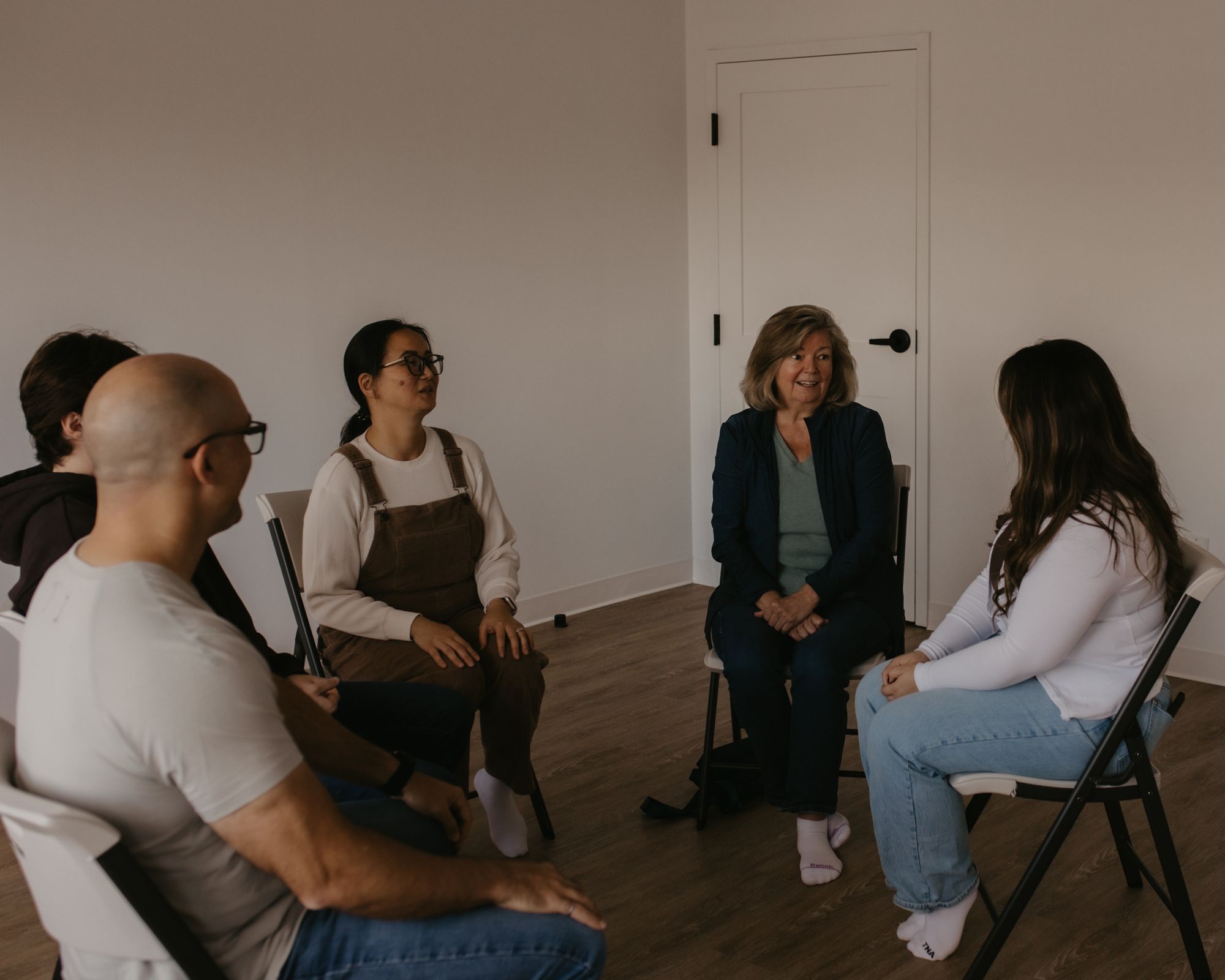
A group of practitioners seated in a circle, talking together in a bright room

The field has changed

The people walking into our rooms are carrying more than ever

We're seeing it in our own clinic. We're hearing it from colleagues everywhere.

The world has moved into a kind of mayday mode, and people are arriving in therapy rooms, session rooms, circles, and retreat spaces with presentations far more layered than many of us were trained for.

Complex trauma alongside OCD. Addiction alongside deep grief. Shame sitting right next to a real spiritual opening.

In this climate, trauma-informed can't just be a tone of voice. It has to be something your nervous system knows how to do.

That means somatic capacity. Steady relational footing. And integrity held not as a value you believe in, but as a stance you practice, moment to moment, especially when it's hard.

When the framework isn't the problem

Clinical interventions and medicine experiences often bring clients into contact with emotions they've lost connection with.

Anger. Grief. Shame. And just as often... joy, love, and aliveness.

For clients with complex trauma or long histories of disconnection from themselves, that contact usually doesn't fall apart because the approach is wrong.

It falls apart because, before the emotion can be fully met, the nervous system has already moved to protect.

A shutdown. A wave of self-attack. An intrusive thought. A quiet turn toward something more tolerable.

The framework never gets its chance to work. This training lives right at that edge.

This isn't a training in more clinical knowledge. It's a training in the space between clinical knowledge and clinical capacity.
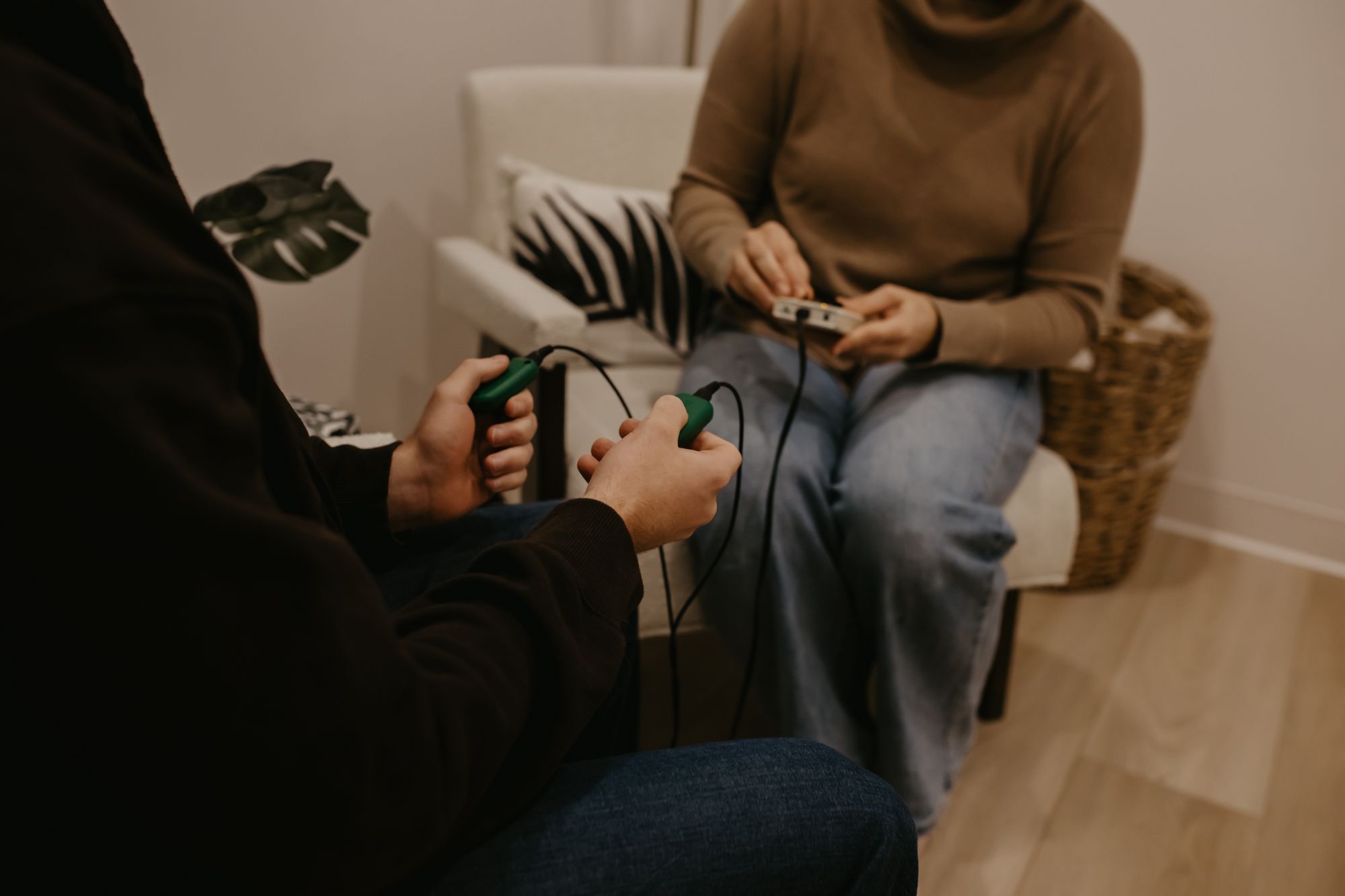
A client holding bilateral tappers while a therapist adjusts the device during a session

Holding both

The wound and the meaning, in the same moment

Depth work often brings clients to experiences that are two things at once.

An old protective pattern. And something genuinely meaningful: an insight, a reconnection, sometimes an encounter with the sacred.

Most clinicians lean one way without realizing it.

Some treat the meaning as a symptom.

Some honour the meaning and step right past the wound.

This training builds the capacity to hold both. To recognize a trauma pattern without collapsing what's meaningful in it, whether that meaning is emotional, relational, or spiritual. And to hold power, consent, and timing with more clarity while you do.

How the day flows

Organized around the integration arc

The day follows the same arc that shapes deep clinical work and medicine work alike.

01

Preparation

What you're tracking before anything deep begins, and how protection shows up early

02

The intervention or medicine experience

Recognizing when protection activates, and meeting intensity without managing it away

03

Integration

Staying present long enough for something new to become possible, and holding what emerged with care

What we'll explore together

This training assumes you already carry trauma training. We're not starting from the beginning. We're going underneath.

C-PTSD, OCD, and addiction patterns, re-viewed as protective systems rather than problems to override

Intrusive thoughts, dissociation, fear, and shame, understood as protection doing its job

Recognizing in real time when a client's protective system has activated

Meeting intensity without rushing to soothe, fix, or redirect it

Holding power, consent, and timing with clarity, in the therapy room and in ceremonial or medicine spaces

How protection behaves in non-ordinary states: when medicine bypasses it entirely, and when it's so entrenched that what looks like resistance, or even surrender, is actually a conditioned protective response

Substantial experiential practice to expand your own capacity to sit with intensity

Examples throughout the day draw from individual therapy, couples and family sessions, and psychedelic-assisted work.

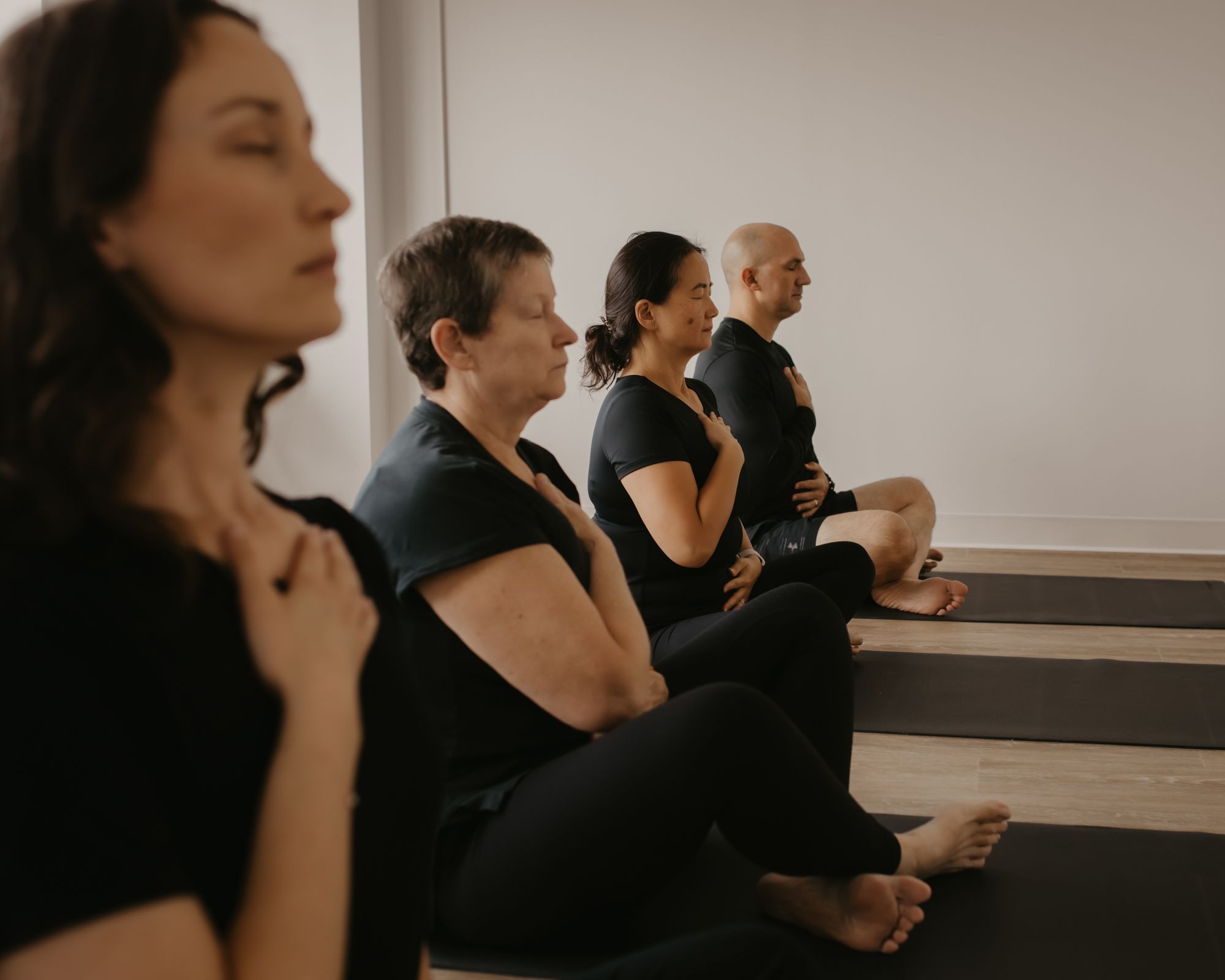
Practitioners seated on mats with eyes closed and hands on their chests during a breath practice

Your capacity is the clinical work

Your window of tolerance shapes how far a client can go with you

If we're honest, we already know...

A client can rarely go further than their therapist can stay present for.

That's why a significant part of this day is experiential. Not as an add-on. As the clinical work itself.

You'll spend real time in practices that stretch your own capacity to sit with intensity, so there's more room in you to stay steady when a client's system starts to protect.

Every experiential practice is an invitation. You choose your level of participation throughout.

Clinical room or ceremonial space: the principles travel

This training is open to two kinds of practitioners, because the work is more alike than it looks.

If you work clinically with complex clients

Every principle applies directly to your sessions. No psychedelic training or personal medicine experience is needed.

If you work with medicine or non-ordinary states

Whether in clinical, ceremonial, breathwork, or other healing settings, you'll see how protective systems show up when ordinary defences are loosened or bypassed altogether.

Same nervous system. Same edge. Different doorway.

A soft pink rose in bloom among green leaves

Who this training is for

This is for you if...

You're a therapist, mental health practitioner, or somatic and nervous system coach

You already carry foundational trauma training and want to go beyond the concepts

You work with complex trauma, OCD, addiction, eating disorders, or long patterns of self-disconnection

You support clients through psychedelic, plant medicine, or other non-ordinary state work, clinically or ceremonially

You're willing to work with your own nervous system, not just learn about your clients'

This may not be the right fit if...

You're looking for an introduction to trauma-informed care

You're looking for psychedelic facilitation training or certification

You'd prefer a lecture-only day without experiential practice

What you'll walk away with

A clearer way to recognize protective activation as it happens, in the body, in the relationship, and in the room

Language for protective patterns that honours their function instead of pathologizing them

Somatic and relational practices you can bring into your very next session

A more grounded way to hold meaning and trauma side by side, without having to choose one

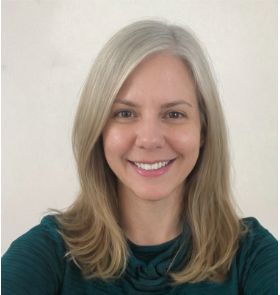
Ash, registered clinical social worker and clinical supervisor

Registered Clinical Social Worker, M.S.W., R.S.W. · Clinical Supervisor · Plant Medicine Guide, Preparation and Integration Coach

Your facilitator

Meet Ash

Ash is a registered clinical social worker and clinical supervisor in Canada with more than 15 years of experience supporting people through trauma, mental health challenges, and life transitions. She's also a certified plant medicine coach.

Her clinical work is rooted in emotion-focused, trauma-informed, and somatic approaches. She's certified in Emotion-Focused Therapy, serves as a Supervisor with the Institute of Emotion-Focused Family Therapy, and is currently completing her somatic certification. Her work weaves together parts-based, nervous system-informed, and depth-oriented modalities.

Ash specializes in complex PTSD, eating disorders, OCD, and addiction, with a focus on the relational patterns that shape emotional regulation, identity, intimacy, and meaning-making across the lifespan. She works with individuals and supports the families, practitioners, and organizations walking alongside them.

Bridging science and soul

Alongside her clinical training, Ash has spent years in experiential learning with psychedelics and plant medicines. What began as professional interest became a deeply personal and spiritual path.

She's had the honour of learning in spaces influenced by Indigenous healers, including the Shipibo-Konibo, Mestizo, and Mayan traditions of the Amazon and Mexico. These experiences widened her understanding of healing across cultural and spiritual contexts.

Her practice brings clinical science, neuroscience, and psychotherapy into respectful dialogue with the relational, ecological, and cosmological principles found in many traditional healing systems, always with a strong commitment to safety, integrity, and ethical practice.

Lived experience

Ash's work is also informed by her own journey through complex PTSD. She knows the long arc of trauma recovery from the inside: the nervous system support, relational repair, inner child healing, emotional processing, and integration that unfold over time.

The heart of her work

Ash sees many adult struggles as natural outcomes of earlier relational wounds, not isolated problems to be fixed.

In therapy, her work centres on attachment repair and relational healing, emotional processing, building nervous system understanding and capacity, and meaning-making and integration over time.

In training and consultation, she focuses on ethical decision-making in complex healing spaces, accountability, rupture, and repair within relationships and systems, and relationally informed program and team culture design.

Join us

Six seats are open to practitioners outside the HRC team. Registration closes November 20.

Holding Complexity

$500

Full-day live training, a 90-minute integration group call with Ash, and a certificate of completion

Monday, November 23, 2026 · 10:00 AM to 5:00 PM ET · Live online

Registration closes November 20, 2026

Reserve your seat

Registration includes a few short questions about your practice so we can make sure this training is the right fit for you.

Questions you might have

Do I need psychedelic training or personal medicine experience?+

No. Examples draw from psychedelic-assisted work, but every principle applies directly to clinical settings.

I'm a wellness practitioner, not a therapist. Can I join?+

Yes. We recommend having basic trauma-informed care training and understanding before you join.

How experiential is the day?+

Very. A substantial part of the training involves practices that build your own capacity to sit with intensity. Participation is always invitational, and you choose how far to go in any practice.

Will the training be recorded?+

The session is recorded, but the recording isn't shared with attendees. Please plan to join live.

When is the integration call?+

We schedule the 90-minute virtual integration call with Ash together as a group after the training.

Is this a certification?+

No. It's an advanced training for practitioners who already carry trauma training. You'll receive a certificate of completion.

Will there be breaks?+

Yes. We'll send the full schedule, including breaks, before the training.

What's your refund policy?+

You can receive a refund of up to 50% until two weeks before the training (November 9, 2026). After that, we're unable to offer refunds.

I have a question that isn't here.+

We'd love to hear from you. Reach out at info@healingrecoverycentre.ca

A tree-lined path under mossy oaks leading toward a fountain

The theory got you here. This is the next layer.

If you've been sitting with clients at the edge of what's tolerable, and wanting more room in yourself to stay there with them, we'd love to have you in the circle.

Six seats · Monday, November 23 · Registration closes November 20

Reserve your seat

Questions first? Reach out anytime at info@healingrecoverycentre.ca